
Last updated November 18, 2026
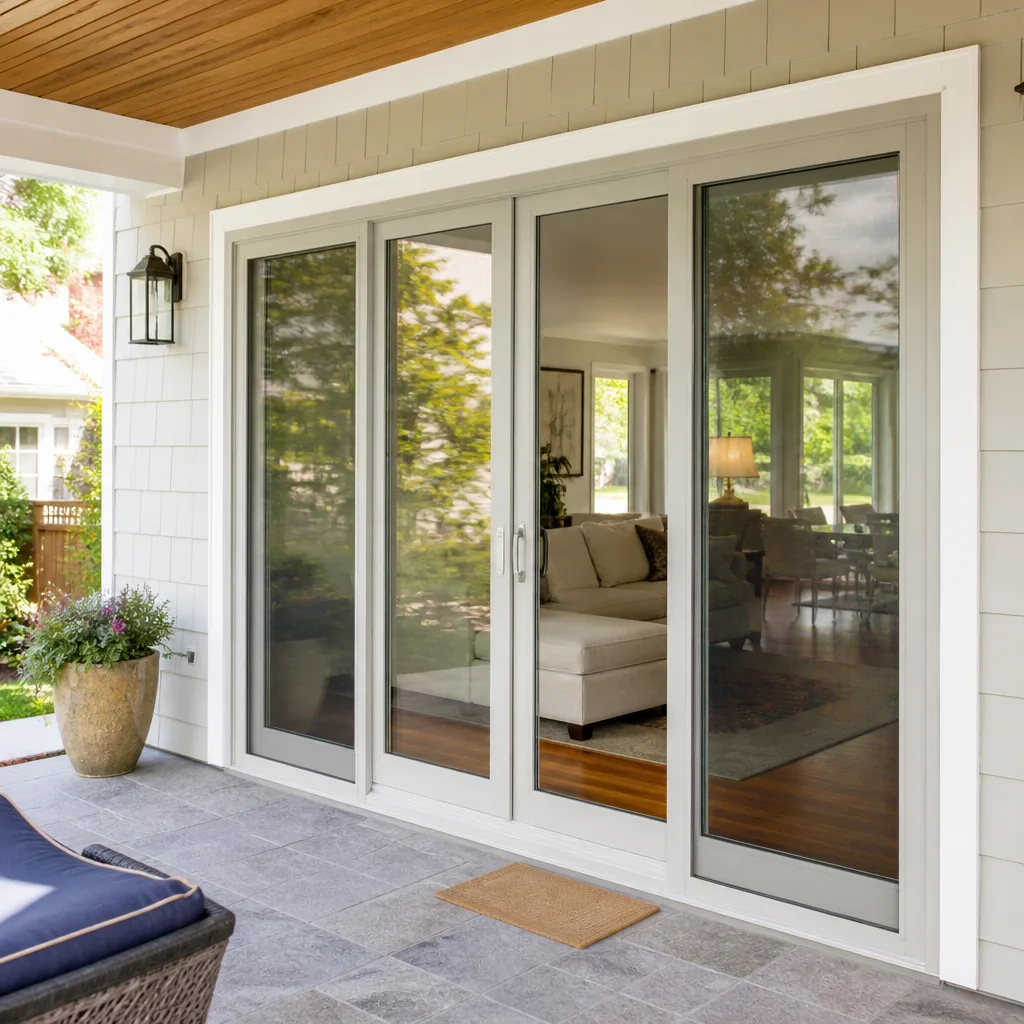 Sliding glass doors
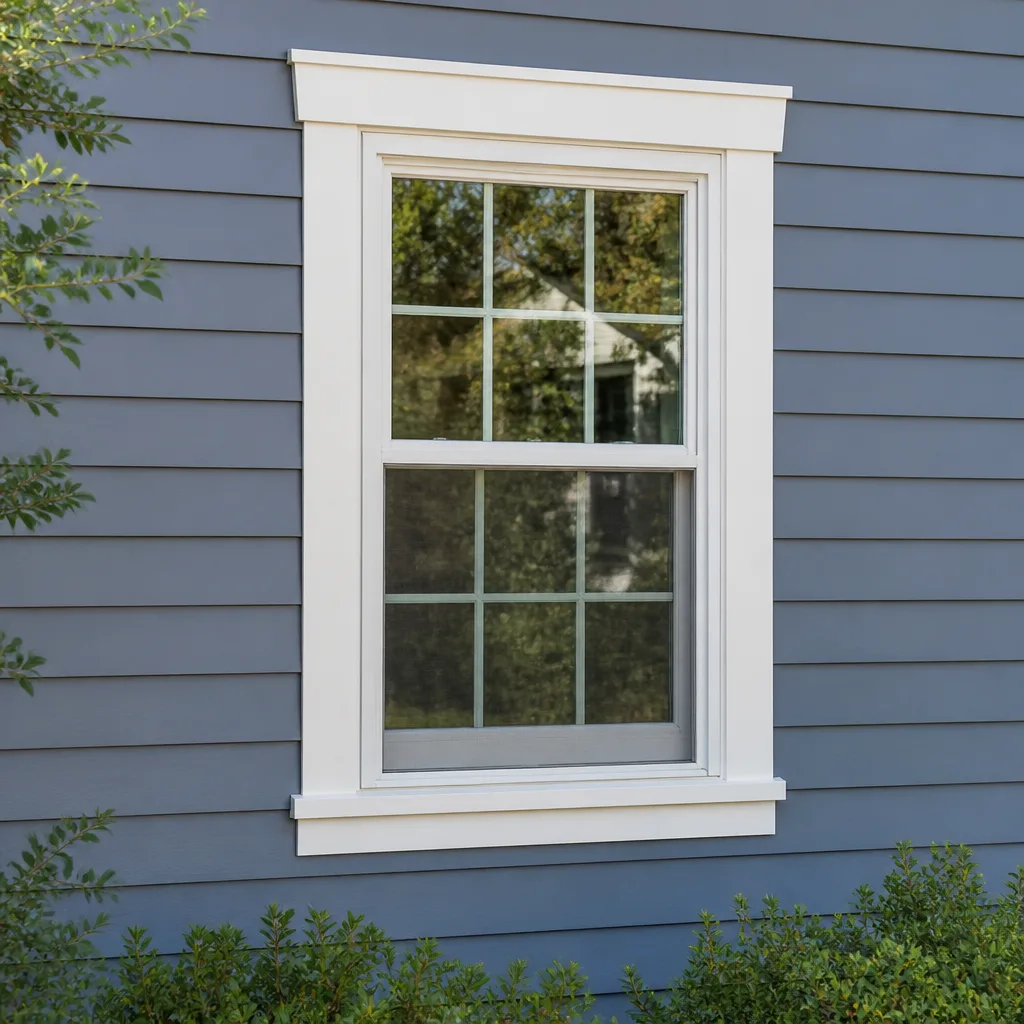 Single hung
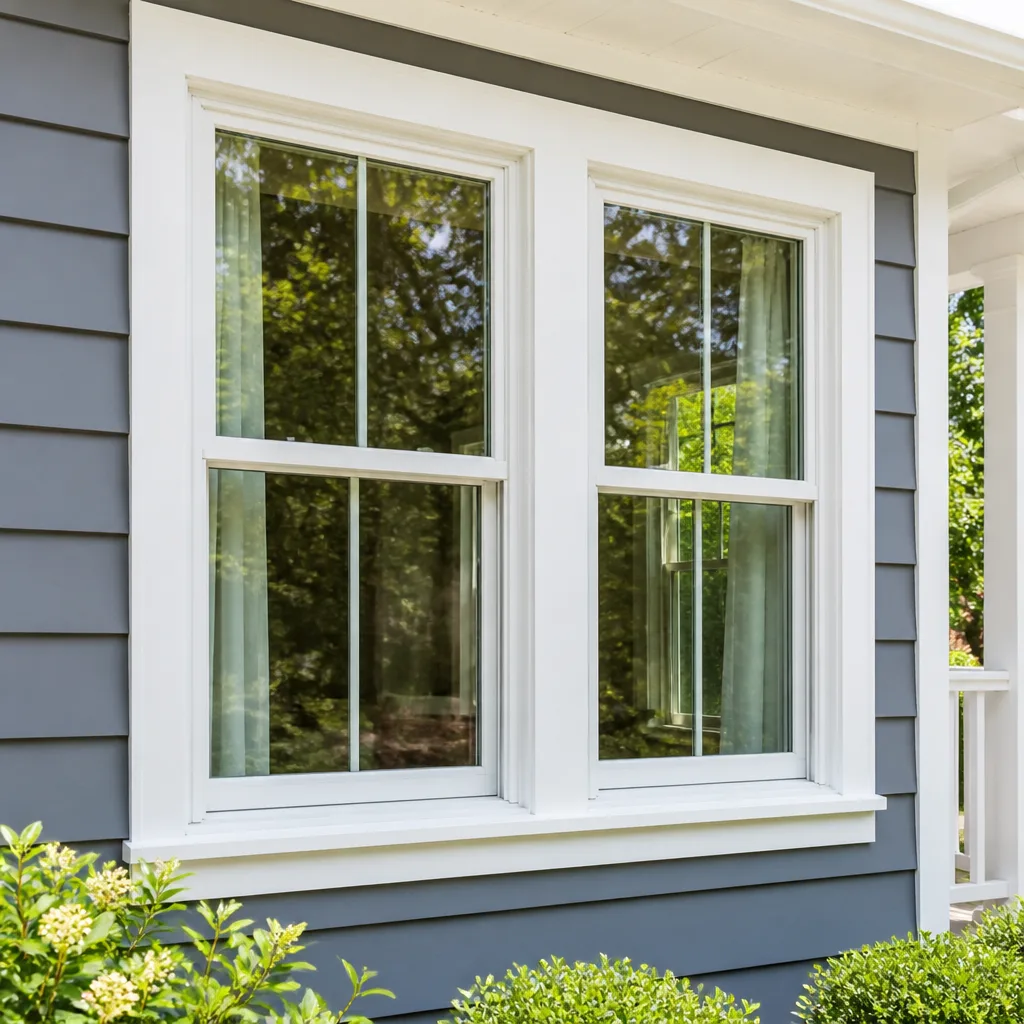 Double hung
 Horizontal roller
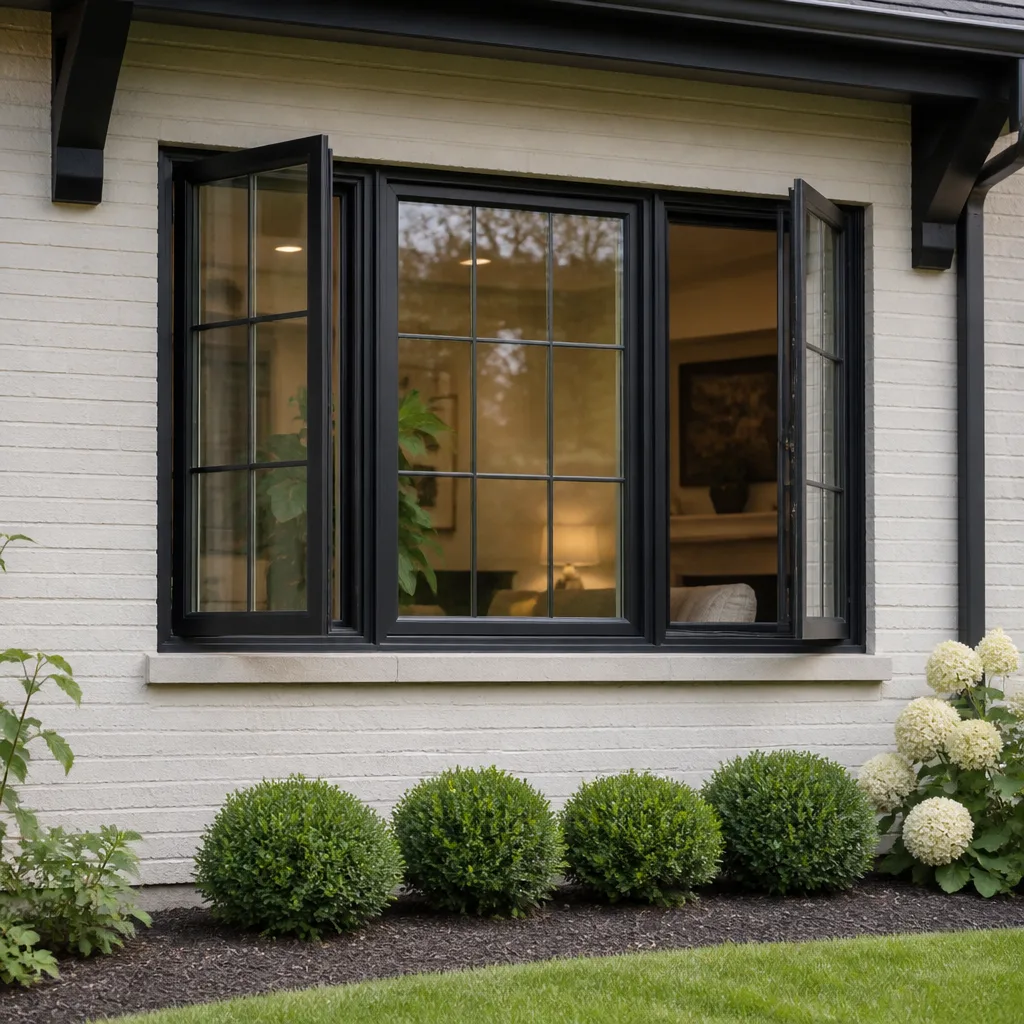 Casement
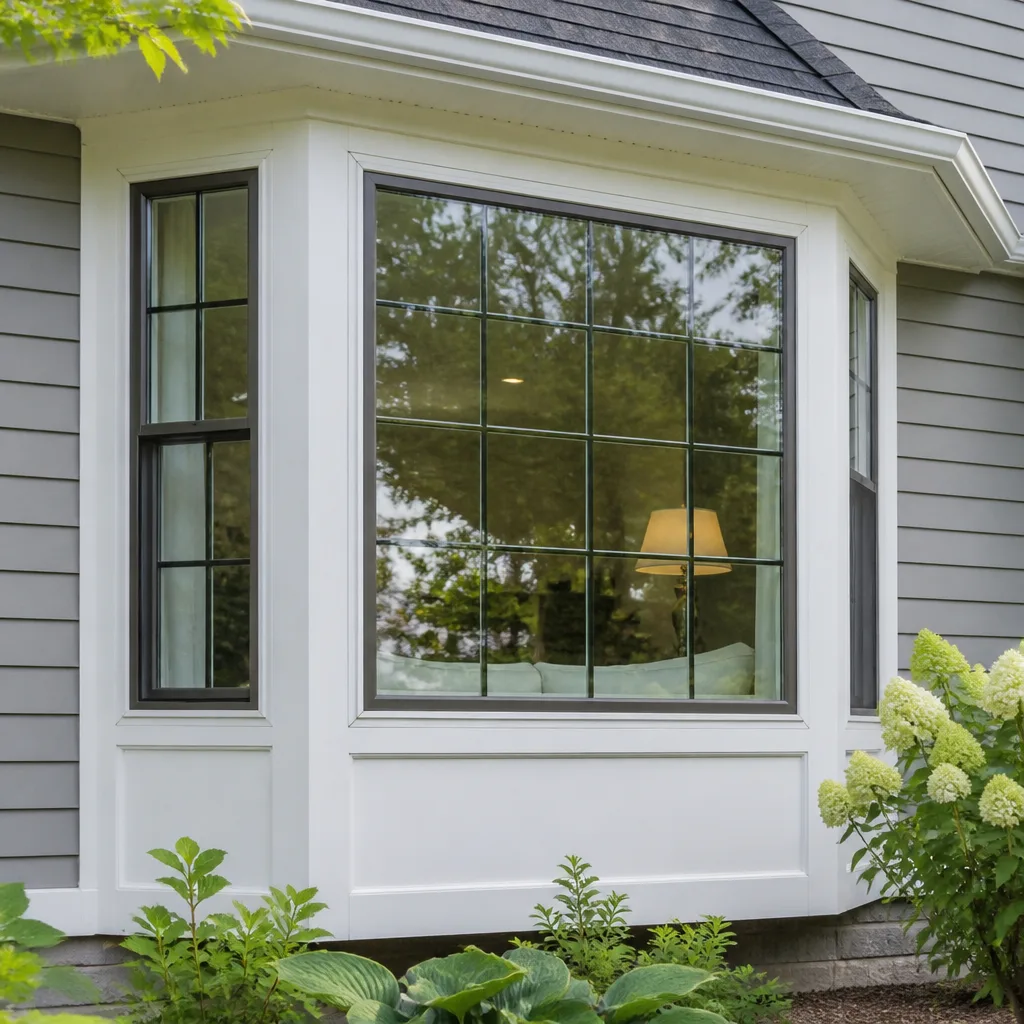 Bay & bow
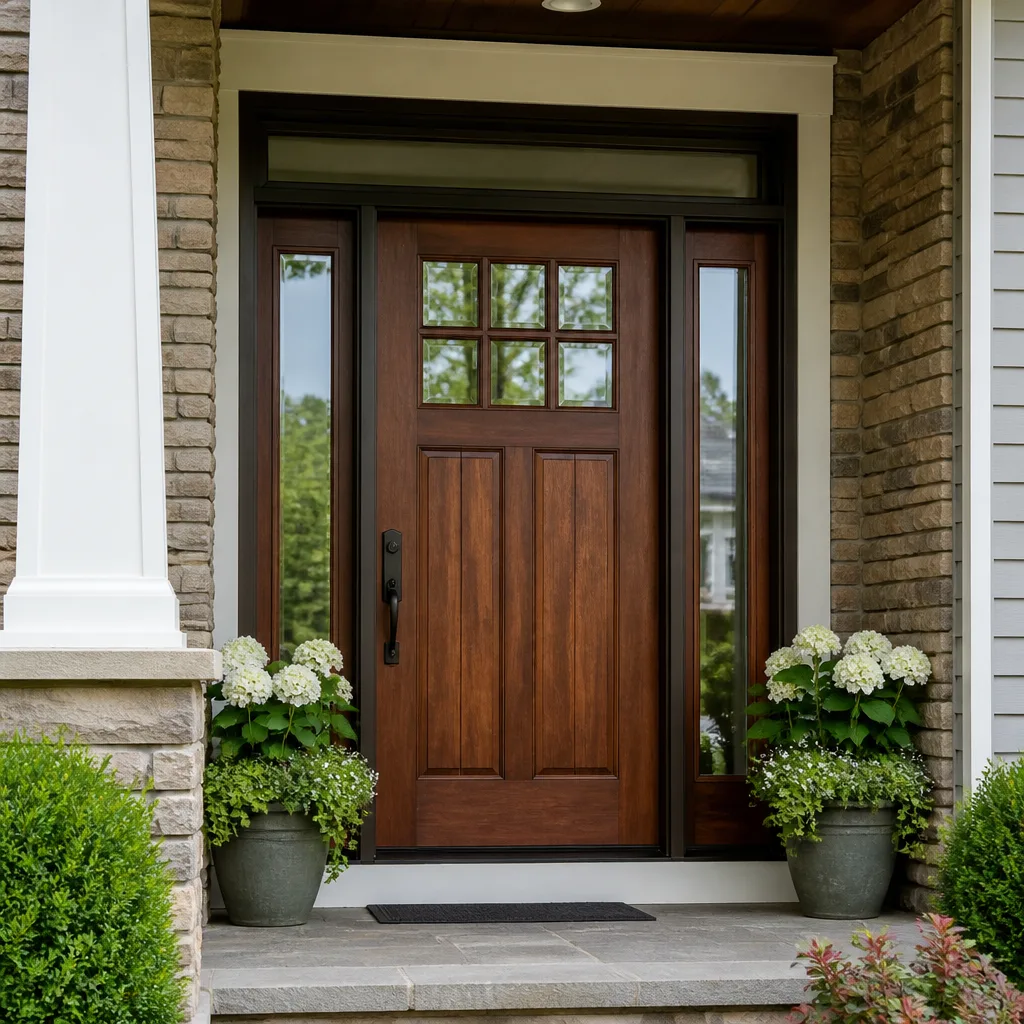 Entry doors
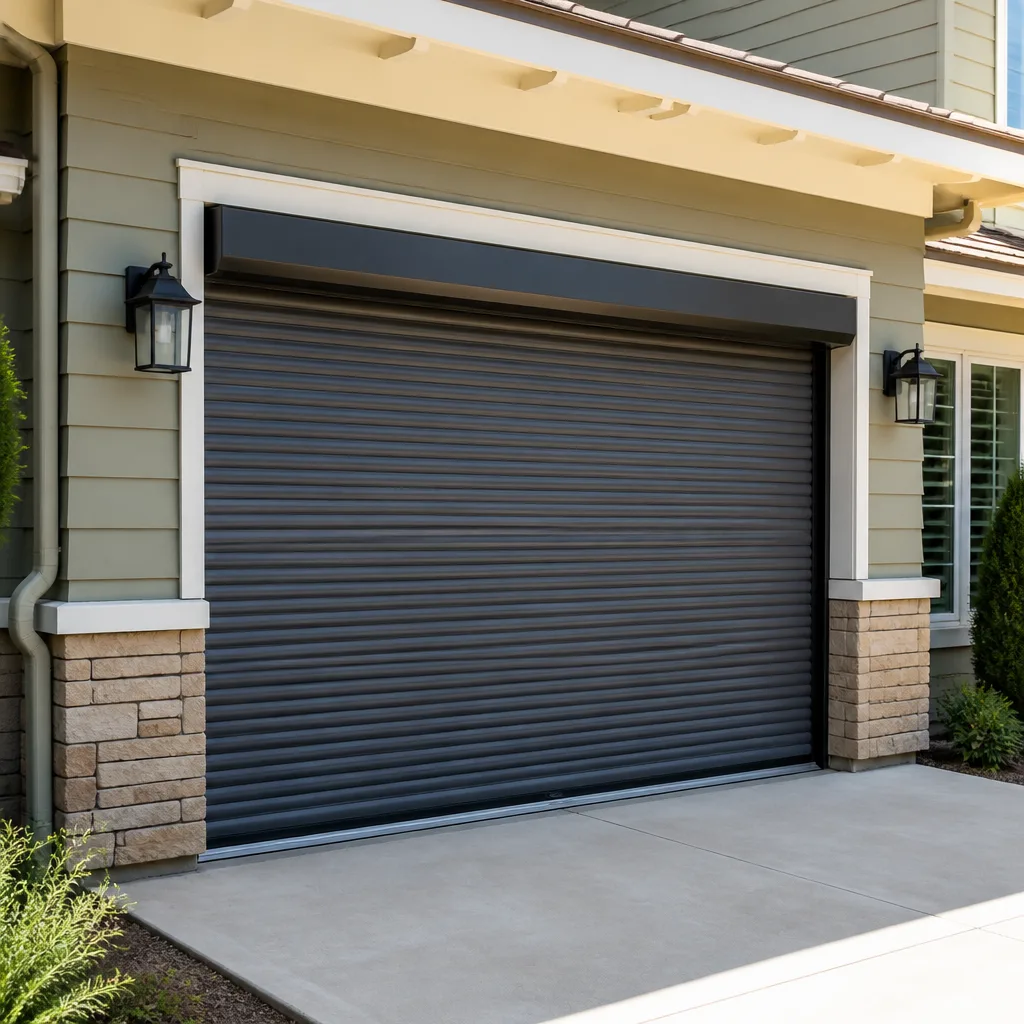
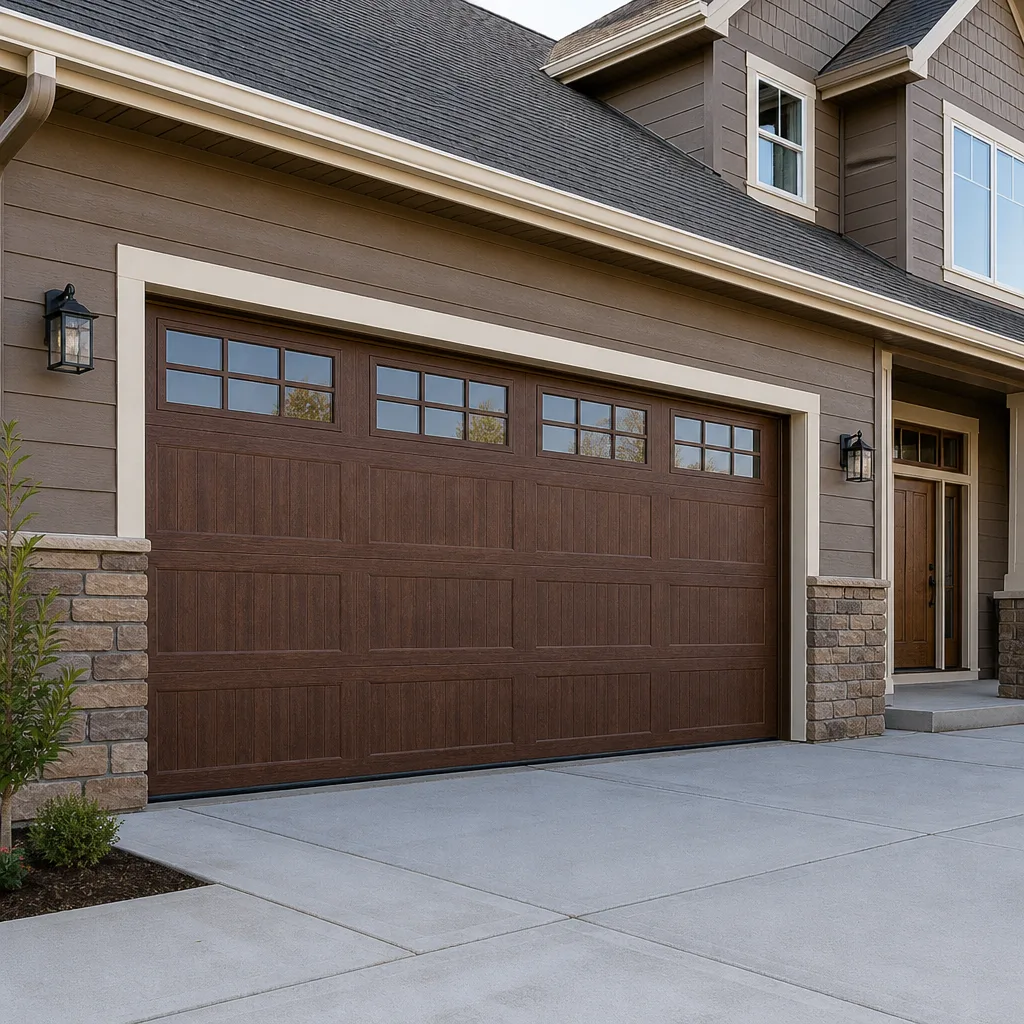 Impact garage doors
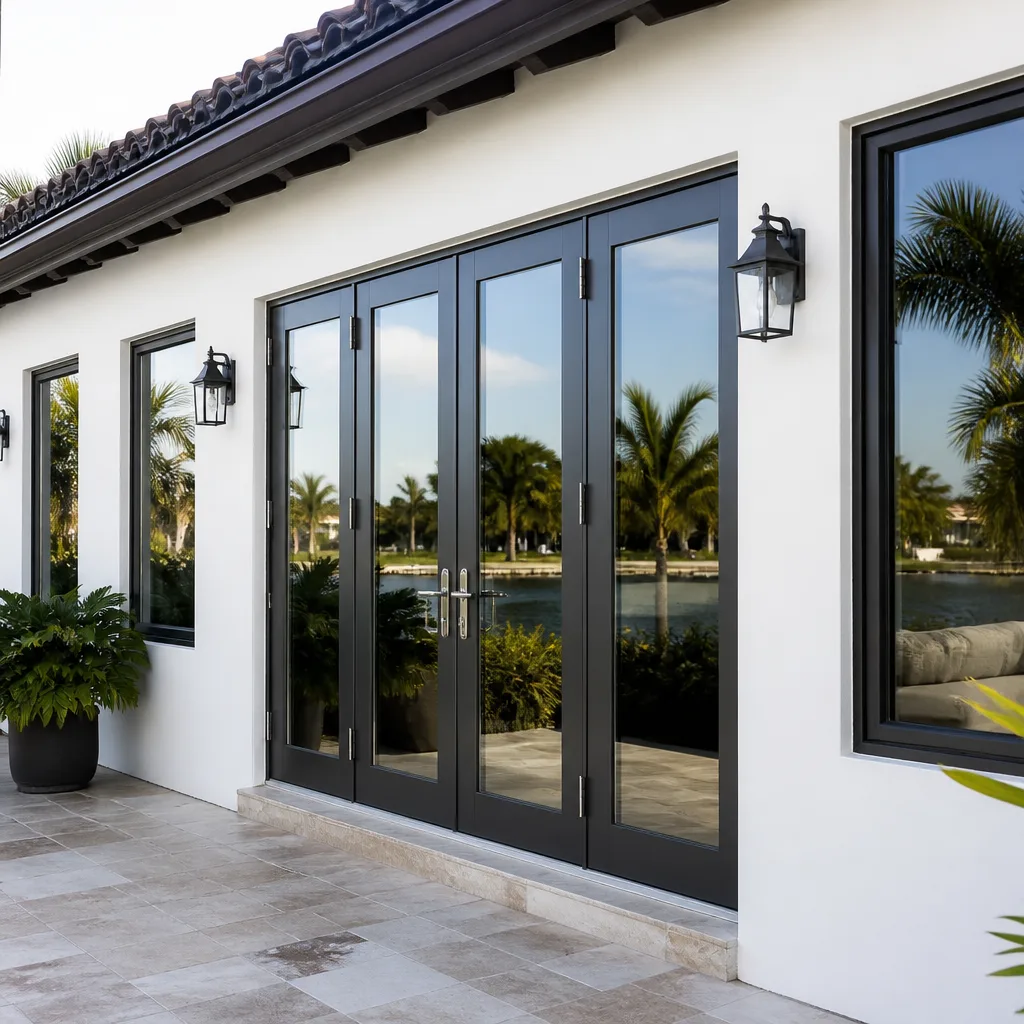 PGT
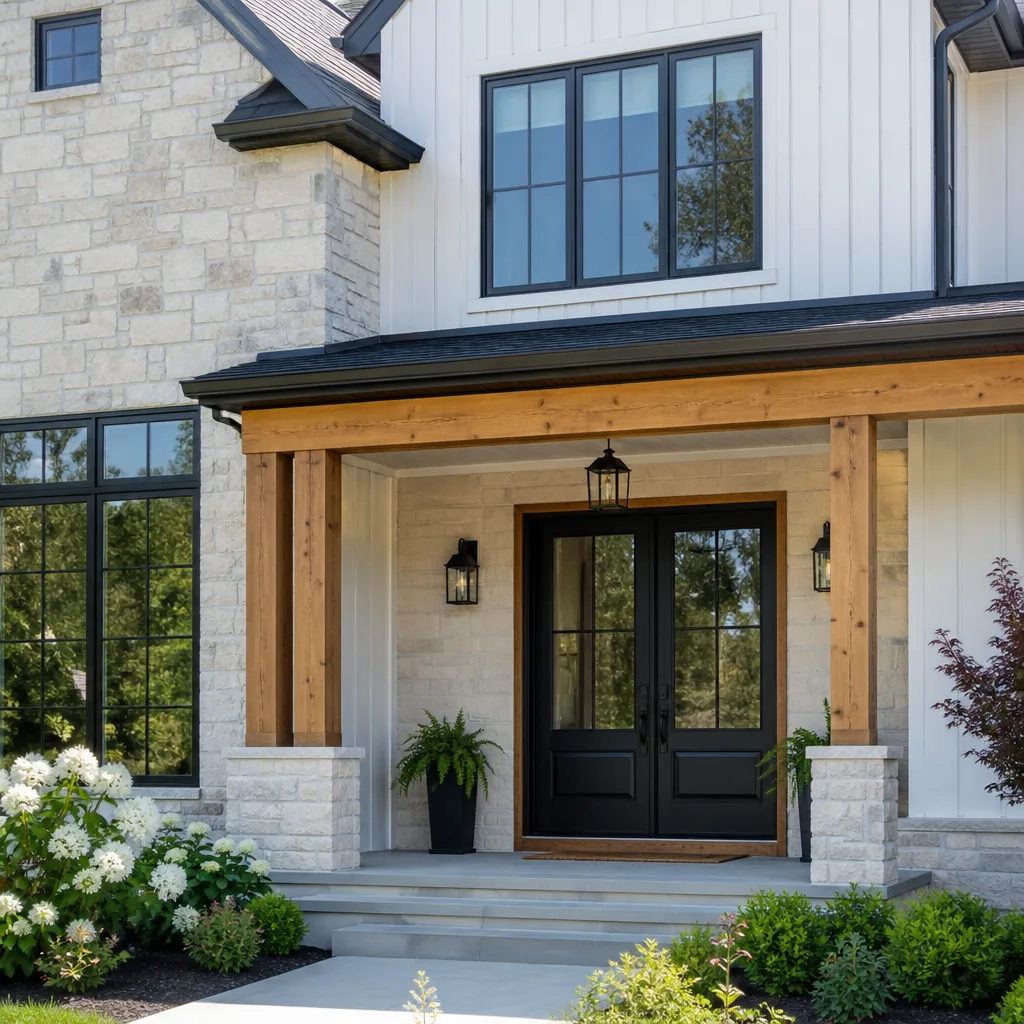 CGI
Free in-home measure and quote - PGT, CGI and CWS impact lines compared on your actual openings, style by style
Get your free estimateChoosing the Right Windows & Doors Brand: A Buyer’s Guide for North Las Vegas
A window’s U-factor and SHGC rating tells you how it performs on day one. What it doesn’t tell you is whether the frame will hold its geometry through 15 years of 115°F summers, whether the glass seal will survive the dust that blows through the valley in spring, or whether a warranty claim in year eight will require shipping a sash from a facility 2,000 miles away. In North Las Vegas, brand selection isn’t really a features contest. It’s a question of climate survivability and service availability. This guide walks you through how the eight Cedarwell brands (PGT, CGI, CWS, ES Windows, ECO Window Systems, Mr-Glass, Therma-Tru, and ViewLux) hold up against North Las Vegas conditions specifically, how to read a warranty the way a desert homeowner actually needs to, and how your home’s age and construction type should steer the choice.
Quick Answer
The best window and door brand for a North Las Vegas home is the one whose frame material and glass package are rated for sustained high heat and thermal cycling and whose warranty is backed by a local authorized dealer who can service it. A superior spec sheet with no serviceable install network carries a warranty you can’t practically use. For most North Las Vegas homes, we steer toward brands with tested vinyl or fiberglass systems and a strong local service footprint, and we verify the warranty terms in writing before any product is ordered.
Styles & brands we work with
- Single hung
- Double hung
- Horizontal roller
- Casement
- Bay & bow
- Sliding glass doors
- Entry doors
- Impact garage doors
- PGT
- CGI
Table of Contents
- The North Las Vegas Climate Suitability Matrix
- Frame Material Longevity in Desert UV and Thermal Cycling
- How to Read a Manufacturer Warranty for a Hot-Arid Climate
- The Service Availability Question: Local Dealer vs. Distant Installer
- How Home Age and Construction Type in North Las Vegas Shape Brand Choice
- The Eight Cedarwell Brands Through a North Las Vegas Lens
- Seven Questions to Ask Before You Commit to a Brand
- Common Mistakes to Avoid
- Frequently Asked Questions
The North Las Vegas Climate Suitability Matrix
North Las Vegas isn’t a generic hot climate. It’s a high-desert solar environment with a specific combination of pressures that most national brand spec sheets don’t fully account for: summer highs that hold above 105°F for weeks, surface temperatures on south- and west-facing glass that can exceed 160°F, an average of more than 290 sunny days per year, and spring wind events that carry fine dust into every gap and seal. Then the temperature drops 30 to 40 degrees overnight. That daily swing is the real test. Thermal cycling is what fatigues seals, warps lower-grade vinyl, and opens gaps that let the dust in.
Here’s how the eight Cedarwell brands stack up on the three North Las Vegas stressors that matter most:
- Solar angle and heat gain. North Las Vegas sits at roughly 36° north latitude. That means the sun is high overhead in summer (less direct wall exposure from the south) but hits west-facing windows hard in the afternoon. Brands whose glass packages include low-e coatings and argon fill with tested solar heat gain coefficients handle this well. PGT and ViewLux both offer glass packages in that category. West-facing bedrooms and great rooms are where this matters most.
- Dust exposure. Spring winds through the valley carry fine particulates that work into weep holes, weatherstripping, and sash tracks. Brands with tighter manufacturing tolerances on their weatherstripping and a design that drains and vents weep holes properly (most fiberglass and quality vinyl systems) tolerate this better than cheaper aluminum systems with minimal sealing. CGI and ES Windows both build toward that standard.
- Temperature swing and seal fatigue. The 35-to-40-degree overnight drop is where sealant chemistry and gasket material get tested. Thermally welded vinyl frames and fiberglass frames handle the expansion and contraction better than mechanically joined aluminum, which is why we don’t recommend unbroken aluminum frames for North Las Vegas residential replacements unless the home’s architecture requires it and the product is thermally broken.
ECO Window Systems and Mr-Glass round out the lineup for entry-level and mid-range replacement work. Therma-Tru covers entry and patio doors, with fiberglass door systems that hold up well to the UV exposure and heat load on a west-facing entry.
If you want to see how brand choice plays out in a full replacement scope, our window replacement in North Las Vegas page walks through the whole process.
Frame Material Longevity in Desert UV and Thermal Cycling
The frame material question in North Las Vegas is different from the frame material question in, say, Seattle or Chicago. You’re not fighting freeze-thaw or heavy rain. You’re fighting sustained UV exposure and daily thermal cycling. Here’s how the three main options actually perform:
- Vinyl (PVC). Modern vinyl frames from quality manufacturers (think PGT, CGI, or ViewLux) are formulated with UV stabilizers and reinforced with steel or aluminum inserts in the sash and frame. Good vinyl handles North Las Vegas heat well. Cheap vinyl does not. The failure mode you’ll see in lower-grade vinyl is yellowing, warping at the sill or head, and eventually glass seal failure because the frame moves more than the seal can tolerate. The key is whether the manufacturer formulates for high-UV markets and offers a finish-fade warranty that explicitly covers the desert southwest.
- Fiberglass. Fiberglass has the lowest thermal expansion coefficient of the three, which means it barely moves through that 40-degree nightly swing. In a climate like North Las Vegas, that’s the single most valuable property a frame can have. Fiberglass doesn’t warp, doesn’t yellow, and holds glass seals better over time. It costs more upfront. Some fiberglass systems also come with factory-applied acrylic or PVDF finishes that hold color under intense UV better than painted surfaces.
- Aluminum-clad wood. This gives you wood’s look on the interior with an aluminum shell on the exterior, which is what faces the North Las Vegas sun and dust. The performance hinges entirely on the cladding system and the thermal break. A thermally broken aluminum-clad system with a proper powder-coat finish holds up well, but the finish quality is the variable. Low-quality powder coat can chalk or fade within 10 to 12 years under this level of UV. Check the finish warranty clause specifically.
One more factor specific to North Las Vegas: stucco. Older homes in the city (we’re talking 1970s through early 2000s builds) often have full stucco wraps with tight window returns. Fiberglass and vinyl replacement units work well with those openings, but the installation has to re-flash and re-seal the stucco joint correctly or you’ll get dust and moisture intrusion at the frame edge regardless of brand. That’s an installation quality issue, not a brand issue, but it’s why the installer matters as much as the product.
How to Read a Manufacturer Warranty for a Hot-Arid Climate
Most warranty documents are written for a national audience and don’t say “North Las Vegas” anywhere. That’s fine. What you’re looking for are the three clauses that actually determine whether the warranty pays out in a hot-arid climate. Read these three before you sign anything:
- Glass seal coverage. The insulated glass unit (IGU) seal is what keeps argon in and moisture out. In a desert, heat and thermal cycling are the primary killers of IGU seals. You want a warranty that covers seal failure (visible fogging or condensation between panes) for at least 10 years, ideally 20. Some brands carry a limited lifetime on the seal; some carry 10. Check whether the warranty excludes seal failure in “extreme heat” zones. Some do, and those exclusions are the ones that bite in North Las Vegas.
- Finish fading. This is the clause most homeowners skip and later regret. Vinyl and painted aluminum can fade or chalk under UV. A finish fade warranty that explicitly covers the desert southwest at a defined threshold (often a Delta E color shift standard) is what you want. If the warranty says “normal weathering” without defining what that means, get clarification in writing.
- Hardware and component replacement terms. Hinges, locks, rollers, and weatherstripping wear out faster in a dusty environment. A warranty that covers hardware for a defined period (10 years is common) and specifies whether the replacement is a shipped part or a local service call changes the practical value enormously. A warranty that requires you to ship a part back to a facility for inspection, then waits for a replacement, is a warranty you’ll use once and never again.
What to look for in writing
- Does the warranty cover seal failure for at least 10 years?
- Does it explicitly cover the desert southwest for finish fade?
- Are hardware replacements serviced locally or shipped?
- Is the warranty transferable to a buyer if you sell the home?
- Is there a labor component, or does it cover materials only?
The materials-only vs. materials-plus-labor distinction is the one that most often creates surprise costs. A warranty that covers the replacement glass but not the labor to install it still leaves you paying a crew to swap a sash. Ask which it is before you commit.
The Service Availability Question: Local Dealer vs. Distant Installer
Here’s the part most brand comparison guides never mention: the brand is only as good as the local service network behind it. A brand with a superior spec sheet and no authorized dealer within 200 miles leaves you in a difficult position when a seal fails in year six. You can call the manufacturer. They’ll honor the warranty. But the part ships from a facility in another state, and the crew that installed it may or may not still be in business. You’re left coordinating a repair you didn’t plan for.
In North Las Vegas, this matters for a specific reason. The city’s housing stock spans a wide range: 1960s and 1970s ranch homes near downtown and the older neighborhoods, 1980s through 2000s stucco builds in the central and northern parts of the city, and newer master-planned community homes in the far north and northeast. Each of those construction types has different window opening dimensions, different stucco integration, and different flashing requirements. A brand that’s sold and serviced by a local dealer who knows the stock can anticipate those variations. A brand bought online or from an out-of-metro installer generally can’t.
The Cedarwell dealer model is built around local service. Each independently owned location carries the eight brands and can service all of them. When you call about a seal issue in year four, you’re talking to a local team that knows the brand, knows the install, and can coordinate the service call without routing it through a national call center. That’s not a feature of the product. It’s a feature of the distribution. And in a climate where a failed seal becomes a comfort problem within one summer, distribution is the thing that determines whether a warranty is actually useful.
If you want to understand how local service ties into a full installation scope, our window installation in North Las Vegas page covers the process from measure to final walk-through.
How Home Age and Construction Type in North Las Vegas Shape Brand Choice
The right brand for a 1975 ranch home and the right brand for a 2018 master-planned community home are often different. Here’s how we think about it:
- 1960s through 1970s ranch homes. These homes often have wood or aluminum single-pane windows in stucco walls with tight returns. The frame material matters less than the installation method: full-frame replacement (pulling the whole window and flashing the rough opening) usually makes more sense than pocket replacement because the original framing has often settled. For this stock, a thermally broken aluminum or fiberglass system works well, and brands like CGI or ES Windows offer good options in that category.
- 1980s through 2000s stucco builds. These are the bulk of the North Las Vegas housing stock. Vinyl replacement windows from PGT, ViewLux, or Mr-Glass fit these openings well, and the key is re-flashing the stucco joint properly. Fiberglass also works here if budget allows. The determinative factor is usually whether the original window was a nail-fin or block-frame install, which the installer needs to verify before ordering.
- Newer master-planned community homes (2010s onward). These homes often have builder-grade vinyl or aluminum windows that are still functional but underperform on solar heat gain, especially on west-facing walls. For this stock, upgrading to a better glass package (low-e, argon fill, higher SHGC performance) within the same frame family is often the right call. PGT and ViewLux both offer glass package upgrades for this scenario. Therma-Tru entry and patio door systems are also common upgrades in these homes because the original builder-grade doors often fail on the weatherstrip and finish.
For door-specific guidance across these home types, see our door installation in North Las Vegas page.
The Eight Cedarwell Brands Through a North Las Vegas Lens
We carry eight brands so the recommendation fits the home, not the installer’s preferred vendor. Here’s a short view of where each brand tends to fit for North Las Vegas work:
- PGT. Strong glass package options and a well-documented finish warranty. A good fit for west- and south-facing replacement windows in mid-to-upper-range homes.
- CGI. A solid vinyl and fiberglass lineup with good thermal performance. Works well for 1980s and 1990s stucco homes where the opening dimensions are consistent.
- CWS. Mid-range vinyl systems with a broad size range, useful for older ranch homes with non-standard opening dimensions.
- ES Windows. Good fit for entry-level and mid-range replacement work, including aluminum systems for homes where the architecture calls for it.
- ECO Window Systems. Entry-level vinyl that works well for rental properties and budget-conscious replacement, with the caveat that finish fade performance depends on the specific product line.
- Mr-Glass. Utility replacement windows and glass service. A good fit for single-window replacements and repairs where a full system upgrade isn’t needed.
- Therma-Tru. Entry and patio door systems, including fiberglass door options that hold up well to UV and heat on west-facing entries.
- ViewLux. A newer lineup with competitive glass package options, useful for homes where solar heat gain is the primary concern.
These are starting points, not fixed rules. The right brand for your home depends on the opening dimensions, the wall construction, the solar orientation, and the warranty terms you can actually verify. That’s why we bring the product samples to the estimate and read the warranty clauses with you rather than handing you a brochure.
Seven Questions to Ask Before You Commit to a Brand
- Is this brand’s glass seal warranty at least 10 years, and does it exclude desert heat zones? Get the answer in writing.
- Does the finish fade warranty cover this climate explicitly? Look for “desert southwest” or an equivalent geographic clause.
- Are warranty service calls handled locally, or does the part ship from out of state? This determines how quickly a seal failure gets resolved.
- What is the thermal break specification on the frame? Especially important if the product is aluminum or aluminum-clad.
- What glass package is being specified for west- and south-facing windows? Low-e coating and argon fill should be standard, not an upgrade, in North Las Vegas.
- Does the price include stucco re-flashing and trim restoration? Brand cost and installation cost are separate line items, and the installation line is where surprise costs live.
- Will the price I’m quoted before work starts be the price on the invoice? We put every price in writing before any work begins for exactly this reason. No invoice surprise at the end of the day.
If you’re budgeting this work, our Lightwell Windows & Doors North Las Vegas home page lays out what to expect at each stage.
Common Mistakes to Avoid
- Choosing on U-factor alone. U-factor measures heat transfer, but in North Las Vegas the more consequential numbers are SHGC (solar heat gain coefficient) for west-facing glass and the thermal expansion coefficient of the frame material. A window with a great U-factor and a high-expansion frame will fail earlier than a window with a modest U-factor and a stable frame.
- Buying a brand whose nearest authorized dealer is in another metro. A warranty you can’t practically service is worth very little. Ask where the nearest authorized service point is before you sign anything, and confirm the local dealer can handle seal and hardware calls.
- Skipping the finish fade clause. “Normal weathering” is not a defined term in most warranties. If the document doesn’t specify a color-shift standard and cover the desert southwest, assume fade isn’t covered.
- Assuming all vinyl is the same. Cheap vinyl and high-quality vinyl look similar on a sample board. The UV stabilizers, the reinforcement inserts, and the finish warranty are where they diverge. Ask for the product specification sheet, not just the brochure.
- Replacing windows without addressing stucco flashing. In North Las Vegas stucco construction, the flashing detail at the window return determines whether dust and moisture get in. A perfect window in a poorly flashed opening still underperforms. This is an installation issue, and it’s why we verify the opening before ordering product.
- Choosing a door brand based on appearance alone. A fiberglass entry door from Therma-Tru behaves differently under UV than a steel or wood door. If the door faces west, verify the finish system and the warranty terms on finish before committing.
- Ignoring the hardware and weatherstrip replacement coverage. In a dusty environment, rollers and weatherstripping wear out. If the warranty only covers glass, you’ll be paying for hardware out of pocket within 8 to 10 years.
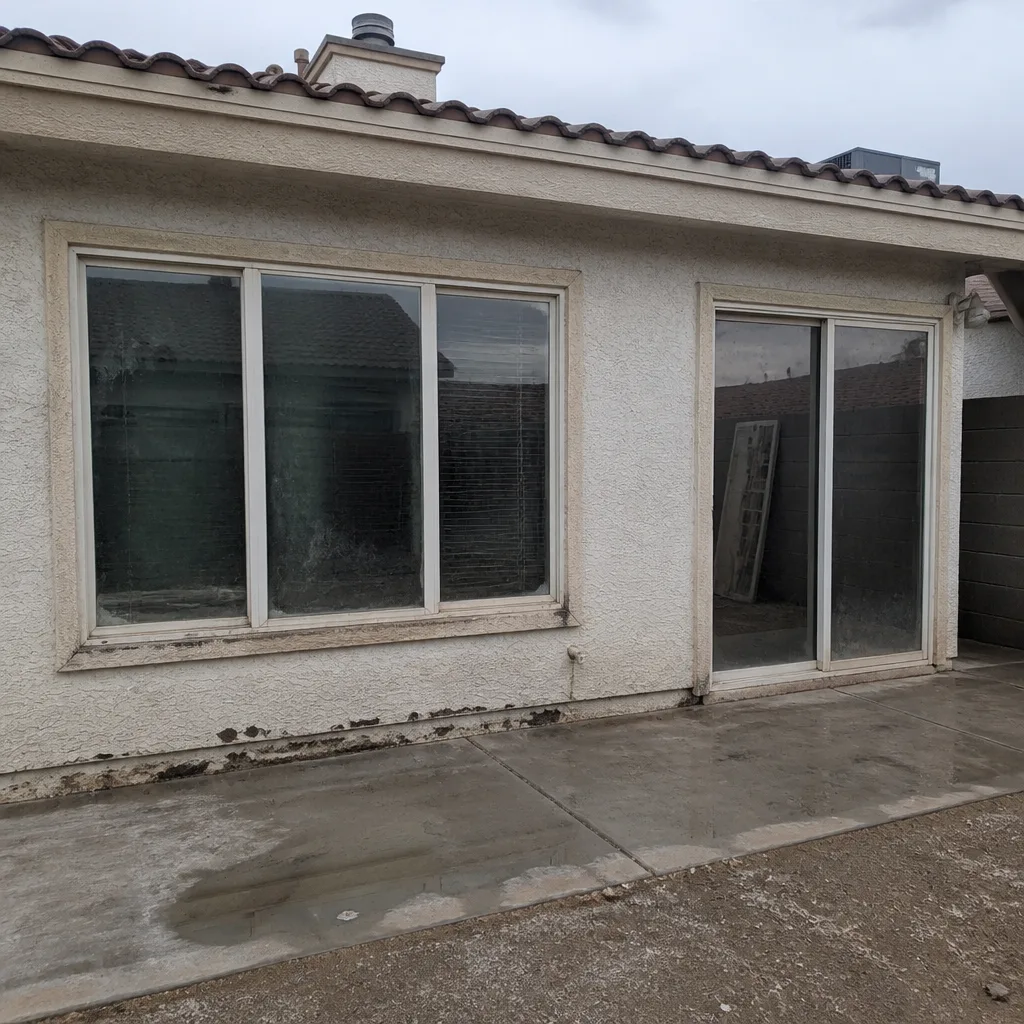
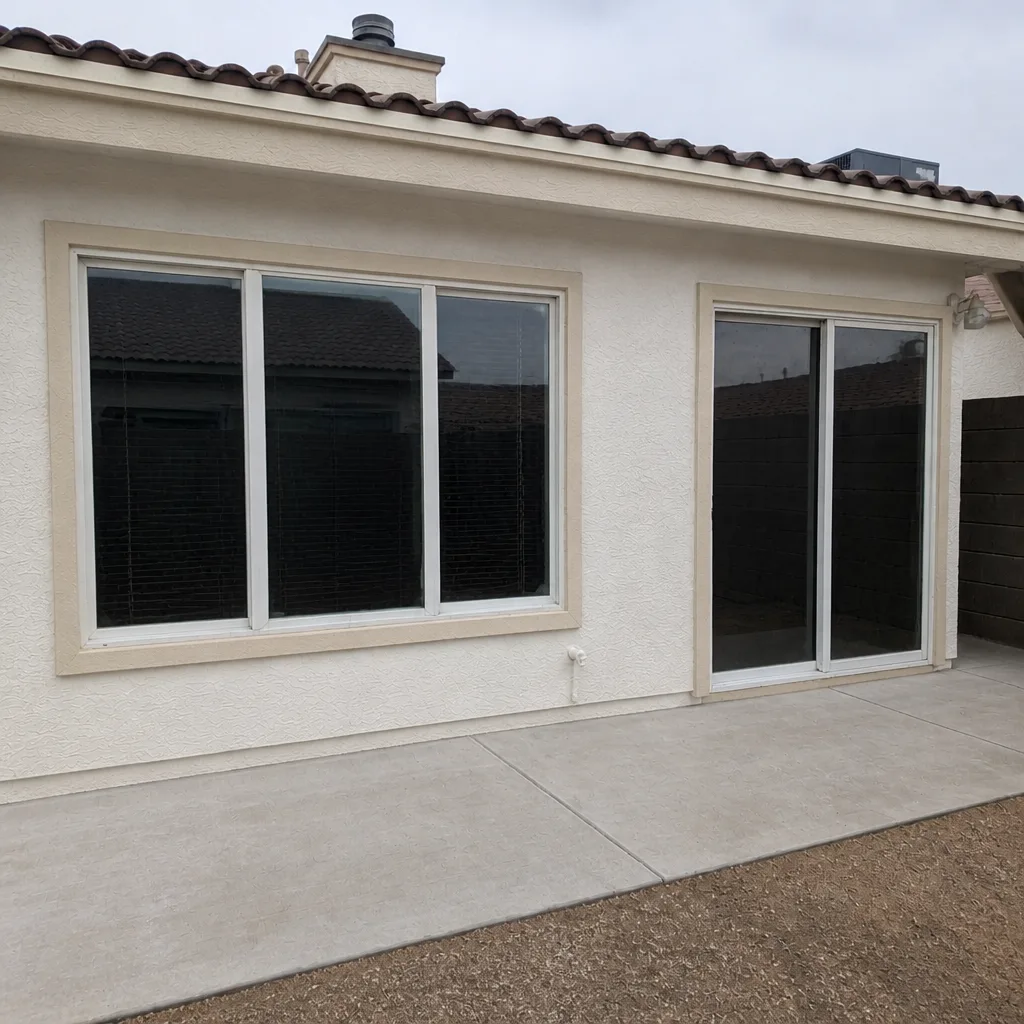
See the difference
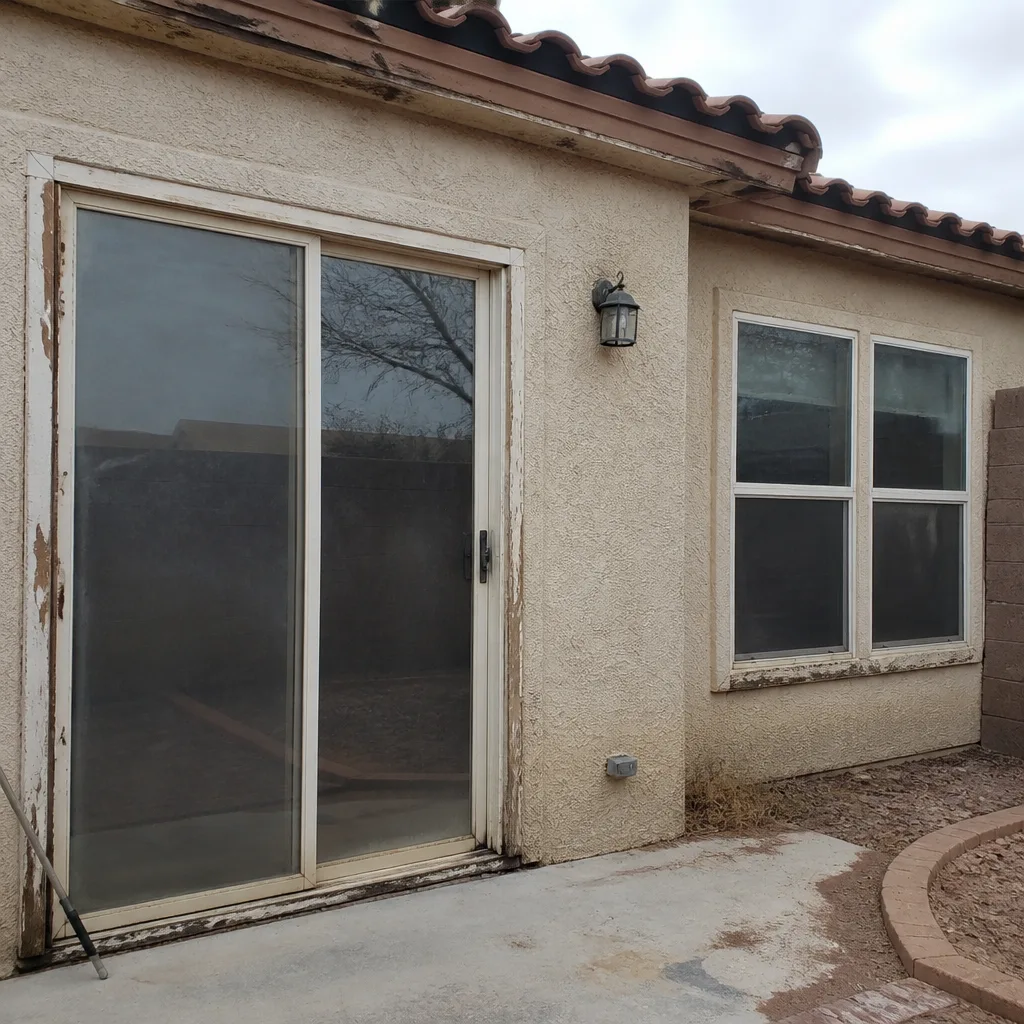 Before
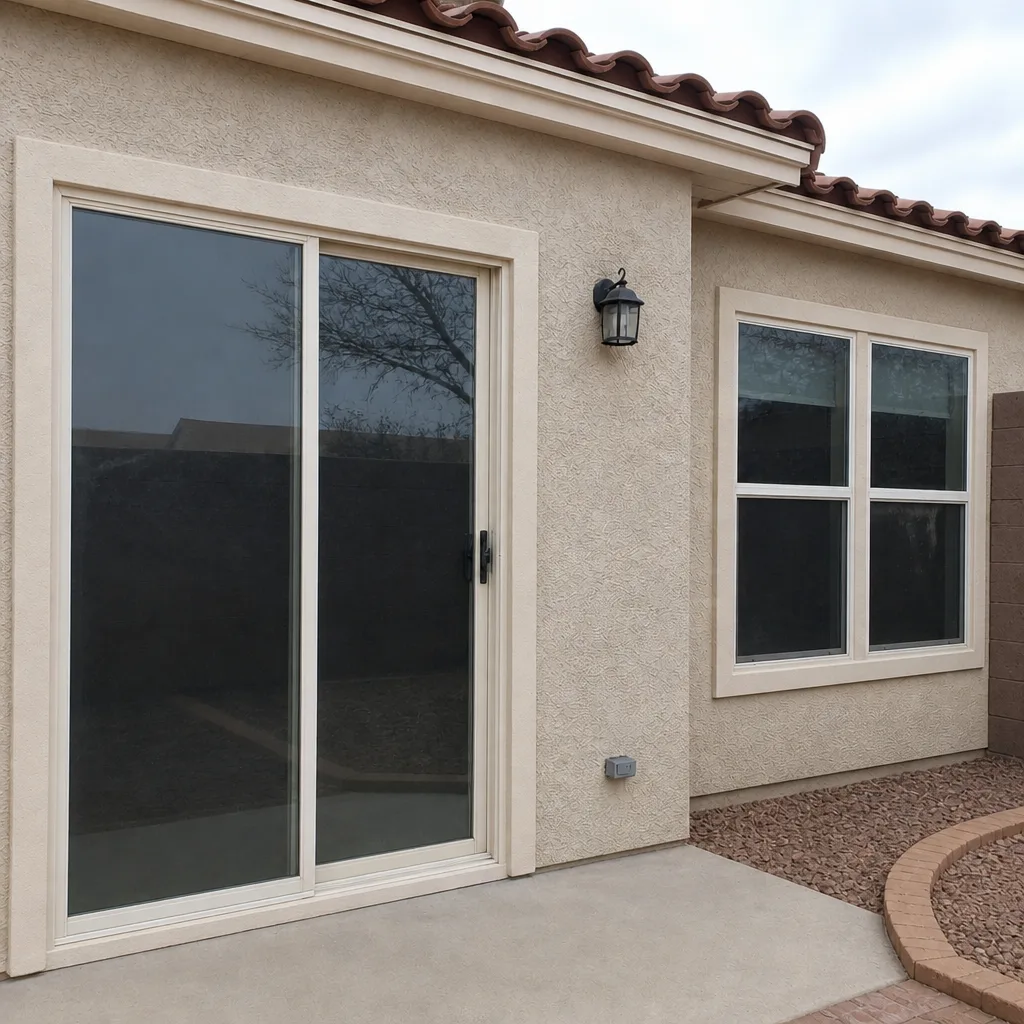 After
 Before
 After
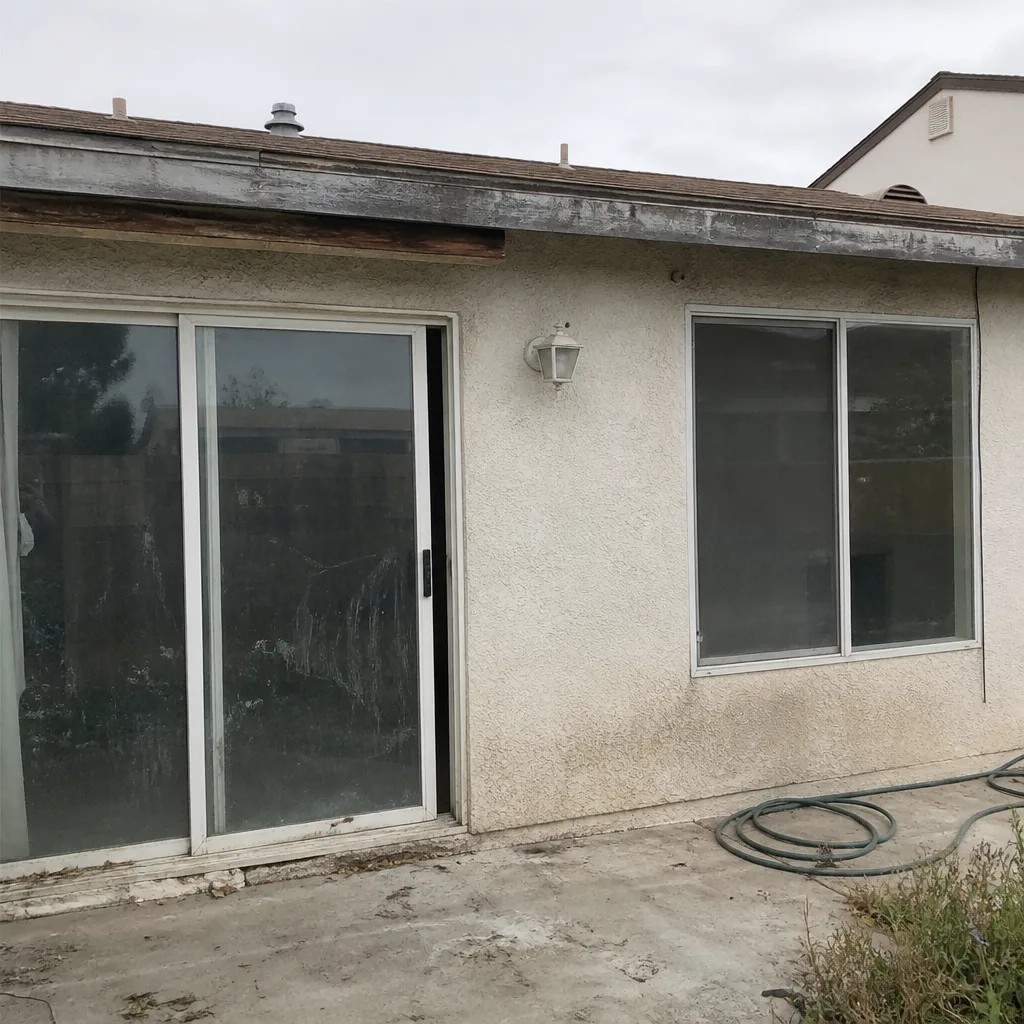 Before
 After
When to Call a Professional
Brand selection is a decision that should be made with the opening in front of you, not from a catalog. If any of these apply, it’s worth scheduling a professional measure before you commit to a product line:
- Your home was built before 2000 and you haven’t verified your stucco construction type or opening dimensions.
- You’re seeing condensation between panes on any existing window (that’s a failed seal, and it’s worth knowing the warranty status before you replace).
- You’re considering a brand whose nearest authorized dealer isn’t local.
- Your west- or south-facing windows are the ones underperforming, and you want to spec a glass package rather than replace all openings equally.
- You’re replacing an entry or patio door and need to verify frame type, finish system, and flashing detail.
Lightwell Windows & Doors North Las Vegas offers free estimates in North Las Vegas. Call (877) 317-4920 to schedule a measure and a written, line-item quote before any work begins.
Frequently Asked Questions
There’s no single best brand, but the brands that perform best in North Las Vegas heat share three characteristics: a thermally stable frame material (fiberglass or quality vinyl), a low-e and argon glass package rated for high solar heat gain conditions, and a finish warranty that explicitly covers the desert southwest. PGT, CGI, and ViewLux all offer products in that category. The right choice for your home depends on the opening dimensions, wall construction, and which direction the windows face.
Quality vinyl windows in North Las Vegas typically last 20 to 25 years before seal failure or frame degradation becomes an issue. Fiberglass windows often last 25 to 30 years because they don’t warp or yellow. Lower-grade vinyl in a west-facing wall may show finish fade or seal failure in 10 to 15 years. The variable that moves those numbers most is the glass seal quality and how well the window handles daily thermal cycling. Call (877) 317-4920 for a free estimate on replacing windows that are past their service life.
It depends on the warranty. Most quality brands offer a 10- to 20-year warranty on the insulated glass seal, but some warranty documents exclude “extreme heat” zones or don’t define what that means. Read the seal coverage clause and look specifically for any geographic exclusion. If the clause is unclear, ask the dealer to confirm in writing before you order. The brands we carry can be verified through the local dealer network, which is the most practical way to confirm your seal warranty is serviceable.
A local dealer can service a warranty claim with a local crew, and can verify the install details that affect whether the warranty stays valid (flashing, opening preparation, and product handling). Online purchases typically honor the manufacturer’s warranty but route service through a national process, which can mean shipping parts back and waiting for a replacement. In North Las Vegas, where a failed seal becomes a comfort issue within one summer, the local dealer network is the more practical option. Call (877) 317-4920 for a free estimate and we’ll walk you through which brands are locally serviceable.
Replacing all windows at once is generally more cost-effective per opening and gives you consistent glass performance across the home. One-at-a-time replacement makes sense if budget is the constraint or if only one or two openings are failing. In North Las Vegas, start with west- and south-facing windows if you’re going one at a time, because those face the highest solar heat gain and thermal cycling. A free estimate can tell you exactly which openings are the priority. Call (877) 317-4920 to schedule.
Yes. Window and door replacement in North Las Vegas generally requires a permit, and we handle the permit application and coordinate the inspection as part of the job. We confirm the permit requirement for your specific scope before any work starts, and the permit and inspection pass are included in the written price you receive before work begins. If your current installer is suggesting a permit isn’t needed, that’s worth a second opinion. Call (877) 317-4920 for a free estimate.
The Bottom Line
Brand selection in North Las Vegas is a climate and service question more than a spec sheet question. The right brand is the one whose frame material holds its geometry through 15 years of 115°F summers, whose glass seal is rated for daily thermal cycling, whose finish fade warranty explicitly covers the desert southwest, and whose local dealer can service a warranty claim without shipping parts from another state. Our eight-brand lineup (PGT, CGI, CWS, ES Windows, ECO Window Systems, Mr-Glass, Therma-Tru, and ViewLux) exists so the recommendation fits your home and your construction type, not the installer’s preferred vendor. Every job is backed by the 365-Day Done Right Promise and the Cedarwell Care Promise, and every price is in writing before work starts.
Call (877) 317-4920 to schedule your free estimate. We’ll bring product samples, read the warranty clauses with you, and give you a written line-item price before anything is ordered. A live person answers the phone 24/7 if a question comes up after the estimate, and our technicians have up to 16 years of experience with North Las Vegas window and door installations.
Written by the team at Lightwell Windows & Doors North Las Vegas.
Six Reasons Homeowners Choose Lightwell Windows & Doors North Las Vegas
Laminated glass and reinforced frames hold up to wind-driven rain, hail and flying debris, so your openings stay sealed when the weather turns.
Low-E insulated impact glass from our manufacturer lines commonly cuts monthly cooling bills 20-30%.
Laminated impact glass shuts out up to 40% of outside noise - traffic, neighbors, weather.
Monitoring services run $30-90 a month. Laminated impact glass resists forced entry around the clock, with no subscription.
Tighter seals and insulated glass even out hot and cold rooms and stop the drafts at the frame.
A full impact package upgrades curb appeal, buyer confidence and appraised value in one project.